I'm sure most horse owners who've ever stabled their horses agree that cleaning up after them is not a pleasant task. Necessary, yes, but not your favourite chore for the day! Or if you've worked in a stable, cleaning box after box, you would definitely appreciate this invention!
No, it's not an automatic poo-picker, although if someone invented that I'd also be pleased. It's a "house breaking" system to teach your horse to poop in the one spot! Long overdue I say!
It's based on a reward for behaviour - they poop or urinate in the right spot, and they get a food reward. Simple theory, and according to the people who made it, they've got 5 horses using it succesfully. There is a heat sensor that detects when a horse has done its business in the correct spot (they use a grille-covered pit), then an automatic feeder releases the reward. Simple!
There are a few limitations - the system needs to remain there as horses go back to their old "habits" if its removed, and because of the way male horses urinate it isn't as successful for them, although they still learn to poop in the right spot - but it has huge potential!
You can imagine the benefits - less bedding, better hygeine, reduced odour, no more cleaning green spots off your white horse the morning of a show........
March 11, 2011

February 28, 2011
The ultimate endurance ride!
Check this out! A woman, her best mate and her little Arab.......riding from Los Angeles to New Hampshire. (That's pretty much one side of the US to the other, for those who, like me, don't know a lot about US geography!)
http://linnykenney.blogspot.com/2010_03_01_archive.html
When I first came across this I couldn't help but think of Forrest Gump.......sorry guys.......you'll have to scroll through the archives to get the whole story, but it's just amazing. If you read right through you will learn that Sojourner, the horse, went through four homes without making a real bond with anyone before coming to Linny. Few people could ride him, and Linny was advised to look for a horse older and more experienced - but to her, the connection meant everything, and she connected with this one! Their story has been featured in Arabian Horse World 5 times, including this one.

This explains it best, from the blog:
I say “our” because what was once mine or once his is now ours since the ride poured its magical powers over us and made two platonic friends of 11 years fall in love. This blog tells the entire tale of our nearly 9 month horseback ride and brings us to the now where Sojourner, Walter, our cat, Porter, and I have landed in NH…a new little family with one big focus: LEATHER CREATIONS (and maybe a few others)....like planning a wedding!!!!


http://linnykenney.blogspot.com/2010_03_01_archive.html
When I first came across this I couldn't help but think of Forrest Gump.......sorry guys.......you'll have to scroll through the archives to get the whole story, but it's just amazing. If you read right through you will learn that Sojourner, the horse, went through four homes without making a real bond with anyone before coming to Linny. Few people could ride him, and Linny was advised to look for a horse older and more experienced - but to her, the connection meant everything, and she connected with this one! Their story has been featured in Arabian Horse World 5 times, including this one.
This explains it best, from the blog:
On March 1st, 2010, my friend, Walter, and I set off on an adventure with our Arabian horse, Sojourner. Together the three of us covered 3,700 miles traveling from Los Angles, CA to my childhood home in Bath, NH. I rode Soj and Walter drove our little Toyota Tacoma.

February 13, 2011
They never cease to amaze me!
Horses are such tough creatures. They can survive situations that just leave us shaking our heads sometimes, wondering how on earth they could possibly have made it through!

Take Eddie the Arab for example........read his full story here.....who survived a harrowing trip through an irrigation tunnel - over 5km in length! His 16 year old rider was riding along the riverbank when Eddie slipped and fell in. The poor rider just had to let go, and watch poor Eddie sucked under the water and swept away. I can only imagine how terrified both of them were feeling at that moment.
The tunnel is a horseshoe-shaped concrete waterway, which carries 740 cubic feet per second. That's a LOT of water, moving in a big hurry. Eddie would have been in about 2.5m of water, with only about 60cm of head room to breathe. Whta's even scarier, is that to actually get into the tunnel, he would have had to go through a water control gate, which meant he would have been about 1.5m underwater, facing backwards - and remained submerged for about 30m or so!

He remained there for 2 days until he was found by a worker in water to his belly. Amazingly, he only had grazes and cuts to show for his ordeal. He did spike a fever and was given fluids and antibiotics, and has now recovered well.
Read on in the article to the last couple of paragraphs - Eddie sure is one good rescuer!

Take Eddie the Arab for example........read his full story here.....who survived a harrowing trip through an irrigation tunnel - over 5km in length! His 16 year old rider was riding along the riverbank when Eddie slipped and fell in. The poor rider just had to let go, and watch poor Eddie sucked under the water and swept away. I can only imagine how terrified both of them were feeling at that moment.
The tunnel is a horseshoe-shaped concrete waterway, which carries 740 cubic feet per second. That's a LOT of water, moving in a big hurry. Eddie would have been in about 2.5m of water, with only about 60cm of head room to breathe. Whta's even scarier, is that to actually get into the tunnel, he would have had to go through a water control gate, which meant he would have been about 1.5m underwater, facing backwards - and remained submerged for about 30m or so!

He remained there for 2 days until he was found by a worker in water to his belly. Amazingly, he only had grazes and cuts to show for his ordeal. He did spike a fever and was given fluids and antibiotics, and has now recovered well.
Read on in the article to the last couple of paragraphs - Eddie sure is one good rescuer!
February 12, 2011
Just a quick one.....
I promise I'll be back writing proper posts soon.....moving away to a new town, starting a new job and sending my eldest off to "big school" has kinda taken up all my time lately!
Just thought I'd mention this: Equine Emergency Rescue, particularly in light of my recent flood post, and with all the terrible, terrible things going on around Australia at the moment. Floods, fires, cyclone - and it's only just February!

It's important for horse owners to have some idea of how to rescue their beloved animals if things do go wrong. Having been in a float accident, let me tell you it is a horrifying, frightening experience. We all know horses are flight animals, and will panic if things go wrong. Even the calmest of horses can lose control in a tough situation - and let's face it, most of the time anyone coming to your rescue is probably not going to understand an awful lot about handling horses, let alone panicked, stressed ones!
The book is written in such a way that it's easy to show someone how to help your horse out of danger. Definitely worth the money - and if you get an electronic copy (like I did), you can print it and keep a copy in the car, stbales, float, truck, everywhere! Well worth the small cost in my opinion.
Just thought I'd mention this: Equine Emergency Rescue, particularly in light of my recent flood post, and with all the terrible, terrible things going on around Australia at the moment. Floods, fires, cyclone - and it's only just February!

It's important for horse owners to have some idea of how to rescue their beloved animals if things do go wrong. Having been in a float accident, let me tell you it is a horrifying, frightening experience. We all know horses are flight animals, and will panic if things go wrong. Even the calmest of horses can lose control in a tough situation - and let's face it, most of the time anyone coming to your rescue is probably not going to understand an awful lot about handling horses, let alone panicked, stressed ones!
The book is written in such a way that it's easy to show someone how to help your horse out of danger. Definitely worth the money - and if you get an electronic copy (like I did), you can print it and keep a copy in the car, stbales, float, truck, everywhere! Well worth the small cost in my opinion.
January 25, 2011
The true gentle giant!
I'm sure everyone will agree that horses who are accepted to Riding for the Disabled are truly special souls. They come in all shapes and sizes, but share that wonderful attribute we call "temperament" - and "good temperament" at that! Today's post is the story of one such horse - Rocket, arguably one of the most famous Australian vaulting horses ever! I don't think there's a vaulter in NSW (perhaps Australia) who didn't know Rocket. While Rocket was quiet and gentle enough for RDA, what endeared him to people, I think anyway, was his cheeky, playful streak.
So without further ado, here is Rocket's story. A big thank you to Lyn Lynch from Sydney Vaulting Group for sharing the story of this very special horse.

The pony club began operating from Tall Timbers Kellyville when the development in WPH Valley took over their grounds. Some of the Riding for the Disabled (RDA) horses, such as Peter Pan, joined in the pony club activities. Rocket was used in RDA classes for the riders from McCall Gardens and for various other riders where a larger horse was suitable. It was a very innovative time within RDA where riders and horses were able to have some serious fun.
Vaulters from other pony clubs, such as Hills District, Glenorie, and McDonald Valley joined in the vaulting training sessions, and since one of the pony club coaches was also an RDA coach, riders from RDA also came to the Tuesday evening classes. Rocket was the backbone of a truly integrated sport where kids of all abilities got to train and compete together.
Rocket’s first TV appearance was on “Wombat” where he showcased vaulting and the WPH Pony Club team. Many invitations were received to give displays at Agricultural Shows, Field Days and the Royal Easter Show, on behalf of Pony Club and RDA. It was around this time that the team became known as Sydney Vaulting Group. RDA Open Day’s in August was a must on his calendar, and His Royal Performance at the opening of the Box Hill centre, in front of Princess Anne, was the pinnacle of his career.
His competitive career began in 1993 with the first National Vaulting Championships held at Tall Timbers, Kellyville. Vaulters from Queensland, SA and WA attended the competition which also included a two day clinic. Rocket was used for all levels of vaulters and competed at trot in some of the events.
Since that time Rocket attended all State Championships up to 2002, and most National Championships, including a trip to South Australia. Rocket created an impact wherever he went, in a fashion that only Rocket could achieve. One such incident was in Canberra, when happily in his yard he decided to put his head thru the gate and scratch his neck. He discovered that the gates were just slipped on to their hinges from above, and Rocket was able to wander off around the property wearing his stable gate like a picture frame. Fortunately he had escaped with his halter attached to his gate, making a very easy return to the yard. Much tying up of gates was done in future.
On another occasion Rocket managed to take his handler “skiing” thru a Lucerne patch whilst en route to the National Championships in Wagga Wagga. He was overcome with the smell and just ran into the middle of the crop, before putting his head down and scoffing the feed. It took two to drag him back when we realized that it wasn’t the best idea to try to load him onto the float next to such a tempting fodder.
In his later years, he attended all competitions at RDA up and including April 2005, after which he retired from competition. Rocket was well known for his mad minute, whereby his warm up routine would religiously include two or three good bucks. This was often quite off-putting for new vaulters, but once the side reins went on and a vaulter on his back, he was always a gentle giant, unless provoked by the occasional sharp knee of a vaulter!
It was during the last winter that he was retired from training and Rocket was fortunate enough to enjoy his short retirement, from his paddock with the best view at RDA.
 |
| Rocket - pic: Sydney Vaulting Group |
I first met Rocket in 1993, when I was a teenager competing at the very first Australian National Vaulting Championships, and I was in awe of the sheer size of him! Some of my team-mates (from memory) actually vaulted on him. A decade down the track, and some of the vaulters I coached borrowed him to compete, as I didn't have horse transport for our horse at that time, and I remember one small child in particular looking up at this HUGE horse with a terrified look on her face. I think some of my favourite memories of him are of his mad minute (see the story below) where everyone always got out of his way!
So without further ado, here is Rocket's story. A big thank you to Lyn Lynch from Sydney Vaulting Group for sharing the story of this very special horse.

 |
| Flying V Vaulters competing on Rocket |
Rocket, Percheron Gelding 1980-2006.
Rocket began his vaulting career in 1986, with the members of West Pennant Hills Pony Club, after disgracing himself in his previous vocation as a carriage horse at The Rocks. It its alleged that a rat ran up his leg, I never did get a blow by blow description of the damage, but he never got to travel under the Sydney Harbour Bridge again.
Vaulters from other pony clubs, such as Hills District, Glenorie, and McDonald Valley joined in the vaulting training sessions, and since one of the pony club coaches was also an RDA coach, riders from RDA also came to the Tuesday evening classes. Rocket was the backbone of a truly integrated sport where kids of all abilities got to train and compete together.
 |
| Rocket warming up - his "mad minute" Pic: Sydney Vaulting Group |
His competitive career began in 1993 with the first National Vaulting Championships held at Tall Timbers, Kellyville. Vaulters from Queensland, SA and WA attended the competition which also included a two day clinic. Rocket was used for all levels of vaulters and competed at trot in some of the events.
Since that time Rocket attended all State Championships up to 2002, and most National Championships, including a trip to South Australia. Rocket created an impact wherever he went, in a fashion that only Rocket could achieve. One such incident was in Canberra, when happily in his yard he decided to put his head thru the gate and scratch his neck. He discovered that the gates were just slipped on to their hinges from above, and Rocket was able to wander off around the property wearing his stable gate like a picture frame. Fortunately he had escaped with his halter attached to his gate, making a very easy return to the yard. Much tying up of gates was done in future.
On another occasion Rocket managed to take his handler “skiing” thru a Lucerne patch whilst en route to the National Championships in Wagga Wagga. He was overcome with the smell and just ran into the middle of the crop, before putting his head down and scoffing the feed. It took two to drag him back when we realized that it wasn’t the best idea to try to load him onto the float next to such a tempting fodder.
In his later years, he attended all competitions at RDA up and including April 2005, after which he retired from competition. Rocket was well known for his mad minute, whereby his warm up routine would religiously include two or three good bucks. This was often quite off-putting for new vaulters, but once the side reins went on and a vaulter on his back, he was always a gentle giant, unless provoked by the occasional sharp knee of a vaulter!
It was during the last winter that he was retired from training and Rocket was fortunate enough to enjoy his short retirement, from his paddock with the best view at RDA.
 |
| Rocket competing at RDA Pic: Flying V Vaulting Team |
January 6, 2011
Floods floods floods!
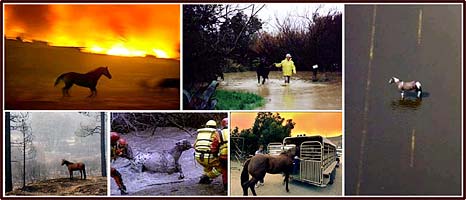
With the horrendous flooding going on in eastern Australia, particularly Queensland, at the moment, it makes you wonder what is happening to all the horses (and other animals) that are stuck in the middle of it. The good news is, at least some of them are making it out of there. I don't know how many were lost, we may not ever know, but there are people out there working hard to rescue the ones they can.
http://www.horsetalk.co.nz/news/2011/01/013.shtml
http://www.thehorse.com/ViewArticle.aspx?ID=17483&src=VW
If you can help foster animals, RSPCA have set up a call centre to register your details. Give them a call on 07 3426 9999 if you can help. Anyone on higher ground can volunteer.
If you can't foster an animal, but would like to help with a donation, visit here. This is the preference that RSPCA have stated instead of giving supplies, as it is easier logistically to redirect money where its needed, rather than carting supplies from everywhere.
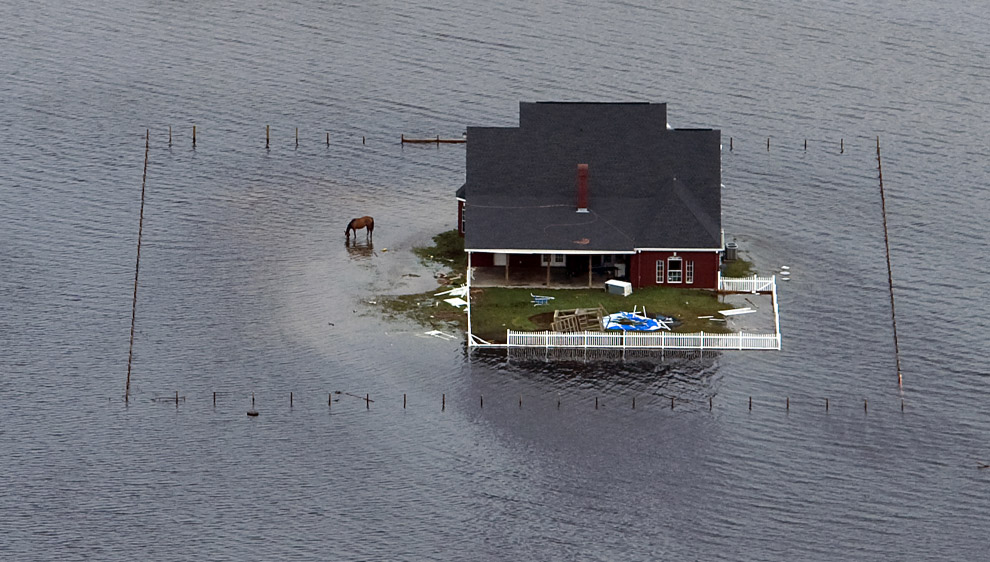
It also begs the question - do you have an evacuation plan if the worst happens? Fire, flood, earthquake, any natural disaster really - or if you lose your job, get sick, whatever. What will happen to your beloved horse/s and pets? Not to mention if you have other livestock as well! So many people do not think about this until it happens, creating unnecessary stress, confusion, and heaven forbid, loss of their beloved horse! Flooding is one of the more common disasters - most people do not realise that living in a 100-year flood plain means that the chance of flooding is calculated as a 1% chance of flooding per year or a 30% chance in the lifetime of many mortgages. It is not necessarily one flood in 100 years!
This is a big question for me personally, as I am about to move to a flood prone area, so one of the first things on my list will be to figure out what to do with my girls if we get one. First step is to look at the floodways and see just where the water will go in a flood - and find the higher ground and the route to it, have a map and directions handy so everyone knows where to go in an emergency. Try to have two or three alternate routes in case roads are closed or too dangerous. Also make sure your driveway is constructed so you aren't stranded. This might seem llike a no-brainer, but too many folks have just a dirt track for a driveway and end up with a boggy mess that can't take any traffic, let alone a loaded horse float and tow vehicle!

Does your horse load and float well? I can assure you that if it's a difficult loader it will be even worse if the need to evacuate arises - the stress of the situation for both yourself and your horse will compound any issues you might have. So practise loading! If you aren't sure of how to fix your problem, get some experienced help, and make sure it's fixed BEFORE something happens. If you don't have your own float, make sure you know where the local transporters are, and ask them about emergencies! You will probably find they will have their own problems in an emergency and do not have time to come and pick up every horse around the place! You could also canvass the local area and get together a list of people who may have a spare float spot. During the 2003 Canberra fire, the major agistment properties were full of generous people evacuating any horse they could. When one float was full, the next lined up. If you have a list prepared, you can organise this in advance. If you have a spare spot, let people know.

Another question - will your horse allow a stranger to handle and load him? A major disaster is not the time to find this out! Have someone he doesn't know at Pony Club or at a competition load him for the trip home (under your supervision) and see how he reacts. You may need to work on this, as its not uncommon for horses to dislike handling by strangers. I have one who will not be caught by anyone but me, even after 11 years!
Is your towing vehicle available and in good repair? If floods are coming, don't let your partner take the tow vehicle to work! You may need it. If you need a hand hitching up, have this done prior to actually needing it, so it is ready to go at the drop of a hat. No point wasting time with endless attempts to back onto the float! (I've done this before!) Keep it serviced and registered - you can guarantee that when you need it the most is when it will break down. (Feel free to let your other half's car or your work car go to the dogs - but always keep your horse vehicle running beautifully at all times!) Check your insurance policy too - some will cover your float if you're towing and others won't, so keep this in mind too. Make sure all towing equipment is suitable for the job and legal, and keep your float serviced too. Oh, and PUT FUEL IN! My other half has a habit of driving one car until it's empty, then swapping over and emptying the other - drives me insane, but also a safety problem if I ever had to get out of there in a hurry! Keep local maps in the car too.
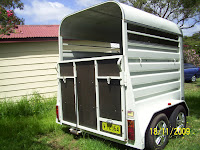
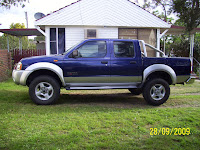
Is your horse easy to catch? Again, in an emergency you will find a difficult horse will be worse, so make sure he is catchable. Have some yards or a small area handy - generally I don't recommend catching with a bucket of food (for safety reasons) but it may be necessary in this situation if he can be hard to catch. Don't be tempted to leave a halter on him in the paddock though, this is very dangerous! The last resort is to let him loose to fend for himself. Do not waste time on your horse if you really can't catch him. It is a terrible decision to have to make, but you can never risk your own safety, or that of others, for a horse who is determined he isn't coming anywhere near you! If you have to leave him behind, do not confine him. Let him free into as large an area as possible. Horses can swim, and can handle water up to their bellies - they can usually manage having their limbs submerged for 48-72 hours.
Do you have a first aid kit and the skills to use it? Brush up on your horse first aid if necessary, and make sure your kit is well stocked and easily accessible. I keep one at home, one in the ute and one in the float, so I always have something on hand. Keep a list of what's in it and expiry dates, so you can replace stock as necessary. CHECK IT regularly. Keep your vet's phone number and emergency contact in it.
Does your emergency destination have adequate food and water? You may need to take these with you. Make sure you know before you leave - many people have been in such a hurry to leave that they have forgotten, and were left with a hungry and thirsty horse, and no way to return to get what they needed. Put some hay and water in your float when there is even the slightest possibility you may have to evacuate. Hay should be in nylon sacks, feed in plastic bags or containers with tight-fitting lids. Also keep some portable water containers on hand at all times. If you have buckets - use metal ones! (Plastic melts in a fire.) It is a good idea to haev at least 20 litres of water in there too. Many horse owners underestimate just how much their horse will drink. Keep chemicals and fuels away from your supplies, so if you do end up flooding, your feed and water containers won't be contaminated.

Do you go away from your horses, on holiday or for work? Do the people who look after them know your plan? Keep a written copy of everything in an easily accessible place, and make sure anyone who looks after your horses knows where it is. It may sound obvious, but have any relevant emergency numbers in there - vet, farrier, your own details. Keep a secondary kit somewhere too, in case the first is damaged or lost. Do you know where your local rescues/welfare groups or horse owner groups are, and what services and resources they have available. If you agist, do you know (and have you practiced) the plan for the property where your horse lives? Are you in contact with other agisters who may be able to help you, or can you help other owners in times of need?

Drills! Practice, practice, practice! It might seem silly, but load your horses up for a practice run to your designated safe area. Unload them, show them around. Find where the water is. Look where fences are. Show these all to your horses. They will feel much more comfortable and settled when they are familiar with a place.
If you end up needing to let your horse go free, remove all rugs and halters from the horse. If you can, paint your contact details on him, so you can be quickly located once the emergency is over.
If your horse has a medical problem, always make sure you have enough supplies on hand. It irritates me no end when people turn up at Emergency (for people) looking for a script because they've just moved/gone on holidays/can't get an appointment or whatever reason - if people do that for themselves, they sure would do it for their animals as well! Always keep enough, preferably extra supplies or medicines! Always! For yourself and your animals. Same for feed - don't let it run out before you think about getting some more.

What do you need to keep on hand for your horses?
After the disaster passes - always check your fencing and water supply before returning horses to their paddocks. Mud is a serious problem if they become trapped, so try to wait until it is dry again. Horses can be prone to rainscald, greasy heel, pneumonia, leg wounds and waterborne diseases (from contaminated supply). Remove any dangerous debris. Keep feeding - the pasture may look ok, but will most likely be water damaged, also called a "green drought." Keep an eye out for mozzies and other insects too.
Thanks to NSW and Vic DPI for the information here.
http://www.horsetalk.co.nz/news/2011/01/013.shtml
http://www.thehorse.com/ViewArticle.aspx?ID=17483&src=VW
If you can help foster animals, RSPCA have set up a call centre to register your details. Give them a call on 07 3426 9999 if you can help. Anyone on higher ground can volunteer.
If you can't foster an animal, but would like to help with a donation, visit here. This is the preference that RSPCA have stated instead of giving supplies, as it is easier logistically to redirect money where its needed, rather than carting supplies from everywhere.
 |
| Pic: freefoto.com |
It also begs the question - do you have an evacuation plan if the worst happens? Fire, flood, earthquake, any natural disaster really - or if you lose your job, get sick, whatever. What will happen to your beloved horse/s and pets? Not to mention if you have other livestock as well! So many people do not think about this until it happens, creating unnecessary stress, confusion, and heaven forbid, loss of their beloved horse! Flooding is one of the more common disasters - most people do not realise that living in a 100-year flood plain means that the chance of flooding is calculated as a 1% chance of flooding per year or a 30% chance in the lifetime of many mortgages. It is not necessarily one flood in 100 years!
 |
| Pic: Infohorse |

Does your horse load and float well? I can assure you that if it's a difficult loader it will be even worse if the need to evacuate arises - the stress of the situation for both yourself and your horse will compound any issues you might have. So practise loading! If you aren't sure of how to fix your problem, get some experienced help, and make sure it's fixed BEFORE something happens. If you don't have your own float, make sure you know where the local transporters are, and ask them about emergencies! You will probably find they will have their own problems in an emergency and do not have time to come and pick up every horse around the place! You could also canvass the local area and get together a list of people who may have a spare float spot. During the 2003 Canberra fire, the major agistment properties were full of generous people evacuating any horse they could. When one float was full, the next lined up. If you have a list prepared, you can organise this in advance. If you have a spare spot, let people know.

Another question - will your horse allow a stranger to handle and load him? A major disaster is not the time to find this out! Have someone he doesn't know at Pony Club or at a competition load him for the trip home (under your supervision) and see how he reacts. You may need to work on this, as its not uncommon for horses to dislike handling by strangers. I have one who will not be caught by anyone but me, even after 11 years!
Is your towing vehicle available and in good repair? If floods are coming, don't let your partner take the tow vehicle to work! You may need it. If you need a hand hitching up, have this done prior to actually needing it, so it is ready to go at the drop of a hat. No point wasting time with endless attempts to back onto the float! (I've done this before!) Keep it serviced and registered - you can guarantee that when you need it the most is when it will break down. (Feel free to let your other half's car or your work car go to the dogs - but always keep your horse vehicle running beautifully at all times!) Check your insurance policy too - some will cover your float if you're towing and others won't, so keep this in mind too. Make sure all towing equipment is suitable for the job and legal, and keep your float serviced too. Oh, and PUT FUEL IN! My other half has a habit of driving one car until it's empty, then swapping over and emptying the other - drives me insane, but also a safety problem if I ever had to get out of there in a hurry! Keep local maps in the car too.


Is your horse easy to catch? Again, in an emergency you will find a difficult horse will be worse, so make sure he is catchable. Have some yards or a small area handy - generally I don't recommend catching with a bucket of food (for safety reasons) but it may be necessary in this situation if he can be hard to catch. Don't be tempted to leave a halter on him in the paddock though, this is very dangerous! The last resort is to let him loose to fend for himself. Do not waste time on your horse if you really can't catch him. It is a terrible decision to have to make, but you can never risk your own safety, or that of others, for a horse who is determined he isn't coming anywhere near you! If you have to leave him behind, do not confine him. Let him free into as large an area as possible. Horses can swim, and can handle water up to their bellies - they can usually manage having their limbs submerged for 48-72 hours.
 |
| Pic: HSUS |
Do you have a first aid kit and the skills to use it? Brush up on your horse first aid if necessary, and make sure your kit is well stocked and easily accessible. I keep one at home, one in the ute and one in the float, so I always have something on hand. Keep a list of what's in it and expiry dates, so you can replace stock as necessary. CHECK IT regularly. Keep your vet's phone number and emergency contact in it.
Does your emergency destination have adequate food and water? You may need to take these with you. Make sure you know before you leave - many people have been in such a hurry to leave that they have forgotten, and were left with a hungry and thirsty horse, and no way to return to get what they needed. Put some hay and water in your float when there is even the slightest possibility you may have to evacuate. Hay should be in nylon sacks, feed in plastic bags or containers with tight-fitting lids. Also keep some portable water containers on hand at all times. If you have buckets - use metal ones! (Plastic melts in a fire.) It is a good idea to haev at least 20 litres of water in there too. Many horse owners underestimate just how much their horse will drink. Keep chemicals and fuels away from your supplies, so if you do end up flooding, your feed and water containers won't be contaminated.

Do you go away from your horses, on holiday or for work? Do the people who look after them know your plan? Keep a written copy of everything in an easily accessible place, and make sure anyone who looks after your horses knows where it is. It may sound obvious, but have any relevant emergency numbers in there - vet, farrier, your own details. Keep a secondary kit somewhere too, in case the first is damaged or lost. Do you know where your local rescues/welfare groups or horse owner groups are, and what services and resources they have available. If you agist, do you know (and have you practiced) the plan for the property where your horse lives? Are you in contact with other agisters who may be able to help you, or can you help other owners in times of need?

Drills! Practice, practice, practice! It might seem silly, but load your horses up for a practice run to your designated safe area. Unload them, show them around. Find where the water is. Look where fences are. Show these all to your horses. They will feel much more comfortable and settled when they are familiar with a place.
If you end up needing to let your horse go free, remove all rugs and halters from the horse. If you can, paint your contact details on him, so you can be quickly located once the emergency is over.
If your horse has a medical problem, always make sure you have enough supplies on hand. It irritates me no end when people turn up at Emergency (for people) looking for a script because they've just moved/gone on holidays/can't get an appointment or whatever reason - if people do that for themselves, they sure would do it for their animals as well! Always keep enough, preferably extra supplies or medicines! Always! For yourself and your animals. Same for feed - don't let it run out before you think about getting some more.

What do you need to keep on hand for your horses?
- Lead rope and halter (preferably one for each horse - they are not expensive!)
- Towels
- Torch & spare batteries
- Wire cutters & perhaps a knife
- Equine first aid kit
- Water buckets (metal)
- Battery operated radio
- Written descriptions of your horses including brands, microchips, markings and identifiable scars etc, plus photos and proof of ownership and vet details in a plastic bag.
 |
| Pic: AP Pool |
After the disaster passes - always check your fencing and water supply before returning horses to their paddocks. Mud is a serious problem if they become trapped, so try to wait until it is dry again. Horses can be prone to rainscald, greasy heel, pneumonia, leg wounds and waterborne diseases (from contaminated supply). Remove any dangerous debris. Keep feeding - the pasture may look ok, but will most likely be water damaged, also called a "green drought." Keep an eye out for mozzies and other insects too.
Thanks to NSW and Vic DPI for the information here.
January 4, 2011
Can you believe this one?
All I can say is wow!
Eli the Quadriplegic Donkey.
Ok, so you're thinking the same as me - what the? How can a donkey have a spinal cord injury that makes him a quadriplegic and actually survive? It just blows me away. And it's better than that - he recovered!
The injury Eli suffered was similar to a human diving into shallow water. There was weakness and paralysis. He could not stand, lift his head, urinate or defecate. Equines of all types decline rapidly when they cannot stand, and Eli was on death's door. His owner was given 2 choices - euthanasia, or experimental stem cell therapy. She took the longshot of stem cells. The stem cells came from a thoroughbred donor, and now Eli the donkey brays, walks and runs as he used to. It took months, but this little equine gives hope to anyone with a spinal cord injury. His treatment has given important information to the research into stem cell use.
Amazing stuff!
Eli the Quadriplegic Donkey.
Ok, so you're thinking the same as me - what the? How can a donkey have a spinal cord injury that makes him a quadriplegic and actually survive? It just blows me away. And it's better than that - he recovered!
 |
| Eli the donkey in his sling. |
Amazing stuff!
December 20, 2010
And you thought you had it tough!
A friend of mine brought this to my attention on facebook. Full story.
Yes, we see disabled riders all the time, and they do a brilliant job with their various disabilities. But this lady, in my opinion, has to be one of the most amazing riders I have ever seen. Why? Because she has NO ARMS. That's right, no arms! I didn't think it was even possible to ride a horse without arms, but she does, and does it well too! She has won European and Paralympic medals in dressage. Not only that, she can saddle, bridle, wash, brush, rug, feed - pretty much everything that needs doing with a horse - with her feet! (She also writes, texts and puts on mascara with her toes!)

And who is her equine partner? His name is Fabuleaux 5, and she has trained him to voice command, leg aids and head movement. She has one set of reins between her toes (she has special cut-out boots) and another set held in her teeth. This special horse lowers his head for bridling and brushing, and when ridden, even in this most unusual way, does his job and does it brilliantly! I have seen in my experience that the horse "knows" when his rider is different, but isn't this guy just something else?!

And here's me thinking I don't feel like riding today because it's horribly windy and I have a rotten headache.........Can't wait to read her book!
Yes, we see disabled riders all the time, and they do a brilliant job with their various disabilities. But this lady, in my opinion, has to be one of the most amazing riders I have ever seen. Why? Because she has NO ARMS. That's right, no arms! I didn't think it was even possible to ride a horse without arms, but she does, and does it well too! She has won European and Paralympic medals in dressage. Not only that, she can saddle, bridle, wash, brush, rug, feed - pretty much everything that needs doing with a horse - with her feet! (She also writes, texts and puts on mascara with her toes!)

And who is her equine partner? His name is Fabuleaux 5, and she has trained him to voice command, leg aids and head movement. She has one set of reins between her toes (she has special cut-out boots) and another set held in her teeth. This special horse lowers his head for bridling and brushing, and when ridden, even in this most unusual way, does his job and does it brilliantly! I have seen in my experience that the horse "knows" when his rider is different, but isn't this guy just something else?!

And here's me thinking I don't feel like riding today because it's horribly windy and I have a rotten headache.........Can't wait to read her book!
November 18, 2010
Probably the most amazing story I've ever seen.......
A friend sent me this link. I just can't believe what people will do to horses, because they seem to think it will do them good. This has to be the stupidest thing, and this sure is one lucky horse to survive it, let alone be returned to good health and some semblance of sanity!
So without further ado, please meet Tullie.

 Now, I can hear your thoughts already - WTF happened to her?! Well, her owners did this. Apparently she had rainscald, which they believed was mange (like dogs get) so used their own remedy of lime mixed with automatic transmission fluid to get rid of it!!!!! I am speechless. When I first read that, I just sat and stared, I could not believe that people are so stupid. That is not an appropriate treatment FOR ANY ANIMAL, let alone a horse with already compromised skin from rainscald. What do we do when our horse is sick and we don't know how to fix it? We GET THE VET. Oh wait.....vets cost money, don't they? Apparently motor oil is used as an old-fashioned remedy for dogs with mange, but while I don't believe in that either, transmission fluid is a different product to motor oil, far more acidic, and to think they mixed it with lime just appalls me!!! What sort of fool does that? I'd like to pour that concoction all over them.
Anyway, after passing through an auction and several sets of hands, Tullie finally ended up at a rescue organisation, and was immediately rushed into veterinary care. She had burns to 70% of her body, her albumin was at 2 (normal is 30), she was about 200kg underweight, and had lost the tips of her ears. Not to mention she was in severe pain that it was difficult to relieve adequately. She was on death's door, no question. She could not stand - but she wanted to live! She ate and drank while she was down, and just kept on going.

Her treatment was not nice. Her wounds had to be debrided, which, as any burns victim will tell you, is incredibly painful. Tullie had to be held up by 3 or 4 people to do this, as she couldn't stand for long herself. She had NO SEDATION for the process. She then had aloe gel and anaesthetic applied to the burned areas, to numb it and assist healing. Anything that could be cleaned was treated with Tea Tree oil and chlorhex. The whole process took months and months, and I'm sure the "quality of life" discussion would have been hanging over the heads of all involved. At what point is it too much?
But Tullie never gave up, so neither did her carers. She continued to eat, drink and fight. She fought through the immense pain and endless treatments. Eventually, she was able to graze.

But her next hurdle stood before her - Tullie was not gaining weight. Her low albumin interfered with fat absorption from her feed, so a good fat supplement was needed. Add to this the immense energy her body needed to heal those awful wounds, and there would be nothing left for Tullie to use for weight gain. It took dozens of products to hit on the right one, but eventually it was found, and she began to gain weight.

These days, Tullie lives the life of luxury, being aunty to new babies and generally enjoying life as boss of the paddock. She isn't fond of strangers, but who can blame her! Her recovery took THREE YEARS! Can you believe it?! A few moments of human stupidity caused so much torment, and fixed onlyby the incredible devotion of other humans.....and the amazing spirit of one little mare.

So without further ado, please meet Tullie.


Anyway, after passing through an auction and several sets of hands, Tullie finally ended up at a rescue organisation, and was immediately rushed into veterinary care. She had burns to 70% of her body, her albumin was at 2 (normal is 30), she was about 200kg underweight, and had lost the tips of her ears. Not to mention she was in severe pain that it was difficult to relieve adequately. She was on death's door, no question. She could not stand - but she wanted to live! She ate and drank while she was down, and just kept on going.

Her treatment was not nice. Her wounds had to be debrided, which, as any burns victim will tell you, is incredibly painful. Tullie had to be held up by 3 or 4 people to do this, as she couldn't stand for long herself. She had NO SEDATION for the process. She then had aloe gel and anaesthetic applied to the burned areas, to numb it and assist healing. Anything that could be cleaned was treated with Tea Tree oil and chlorhex. The whole process took months and months, and I'm sure the "quality of life" discussion would have been hanging over the heads of all involved. At what point is it too much?
But Tullie never gave up, so neither did her carers. She continued to eat, drink and fight. She fought through the immense pain and endless treatments. Eventually, she was able to graze.

But her next hurdle stood before her - Tullie was not gaining weight. Her low albumin interfered with fat absorption from her feed, so a good fat supplement was needed. Add to this the immense energy her body needed to heal those awful wounds, and there would be nothing left for Tullie to use for weight gain. It took dozens of products to hit on the right one, but eventually it was found, and she began to gain weight.

These days, Tullie lives the life of luxury, being aunty to new babies and generally enjoying life as boss of the paddock. She isn't fond of strangers, but who can blame her! Her recovery took THREE YEARS! Can you believe it?! A few moments of human stupidity caused so much torment, and fixed onlyby the incredible devotion of other humans.....and the amazing spirit of one little mare.

October 23, 2010
Tinkerbell............a princess just waiting to shine!
Yes, it's another neglect case. Another horse on death's door.....there are so many these days! I will not air my thoughts on the people who do this to horses, or we would be here all day. Suffice it to say, a number of unsavoury words come to mind, and even they do not go far enough!

Tinkerbell was so weak that when she laid down, she could not stand. She had no fat and virtually no muscle. She was infested with parasites, both internal and external. There are many who would have euthanased her on the spot, and I would not blame them for doing so.

Tinkerbell had to be dragged on a slide to a sling - where she subsequently spent more than a month as she slowly regained her strength. She was given round the clock feeding, every three hours, with staff sleeping on the floor beside her to attend to her every need - feeding, watering, cleaning, taking her for short walks out of the sling. She had an incredible spirit and will to live.

Thanks to the dedication and care of the wonderful people at Days End Farm Horse Rescue, Tinkerbell made a full recovery, and is now happy, healthy and enjoying life! She has been the star of several parades, and has a new found celebrity, especially with children. She participates in shows, and has a bright future thanks to her fighting spirit and some wonderful people. She is the very picture of health. Tinkerbell is a true Miracle!


October 19, 2010
A quick update!
An update on Amazing Grace.......
Original post
Unbelievably, the two women involved plan to plead not guilty.......scary stuff! Um, just how do you think you'll get away with it? Fugly says it all on her blog - warning, some explicit language used here!
http://fuglyblog.com/?p=2388
Don't forget Grace's facebook page if you want to keep up with her progress! This beautiful girl has stolen our hearts, and remains a Miracle to this day. I'm just thrilled to see her looking so well! I know I will never meet her, being on the other side of the world and all, but she is in my thoughts, and I am sending healing vibes to her every day. Let's hope her story can educate people on the huge responsibility a horse really is. It's not rocket science to look after a horse properly, just common sense. (Although common sense is not so common these days.)
We need more Darla Clark's in this world.....I wonder if we can clone her? Just look at the fantastic job she has done with Grace.
Don't forget to send me your stories! It's great sifting through the ones that come in, I just love happy endings! magicsundancer@hotmail.com
Original post
Unbelievably, the two women involved plan to plead not guilty.......scary stuff! Um, just how do you think you'll get away with it? Fugly says it all on her blog - warning, some explicit language used here!
http://fuglyblog.com/?p=2388
Don't forget Grace's facebook page if you want to keep up with her progress! This beautiful girl has stolen our hearts, and remains a Miracle to this day. I'm just thrilled to see her looking so well! I know I will never meet her, being on the other side of the world and all, but she is in my thoughts, and I am sending healing vibes to her every day. Let's hope her story can educate people on the huge responsibility a horse really is. It's not rocket science to look after a horse properly, just common sense. (Although common sense is not so common these days.)
We need more Darla Clark's in this world.....I wonder if we can clone her? Just look at the fantastic job she has done with Grace.
 | ||
| Grace now.......only 2 months ago she was just bones with eyes, and look at her now! |
 |
| Grace as she was found......... |
Don't forget to send me your stories! It's great sifting through the ones that come in, I just love happy endings! magicsundancer@hotmail.com
October 15, 2010
A quick mention........
Ok, so this lady swears she is not a miracle worker.....but she is! It's all down to her years of hard work and dedication that so many horses all over the world can now reach their potential! (Ok, so not necessarily a Miracle, but I bet the horses think so!)
When I first met this lady I was quite young and impressionable, listening to all the so-called experts and their fads. Many of them told me they "didn't believe" in the work she did....but I knew immediately, from the obvious difference in my horses, that her work was brilliant. The concept is simple - the horse hurts, get rid of the pain and he'll work better and be happier. Makes sense!
I remember one particular horse who would pig-root when you saddled him, and behave dreadfully under saddle - he was close to being given up on when he met her.......once his issues were sorted, he went on to be a riding school pony! His owner at the time would say she saved his life.
http://diannejenkins.com.au/Default.aspx?tabid=155
Have a read of the testimonials and you'll realise what great work she does.
When I first met this lady I was quite young and impressionable, listening to all the so-called experts and their fads. Many of them told me they "didn't believe" in the work she did....but I knew immediately, from the obvious difference in my horses, that her work was brilliant. The concept is simple - the horse hurts, get rid of the pain and he'll work better and be happier. Makes sense!
I remember one particular horse who would pig-root when you saddled him, and behave dreadfully under saddle - he was close to being given up on when he met her.......once his issues were sorted, he went on to be a riding school pony! His owner at the time would say she saved his life.
http://diannejenkins.com.au/Default.aspx?tabid=155
Have a read of the testimonials and you'll realise what great work she does.
October 10, 2010
Mini ponies are a "Godsend"...........Little Miracles
Yes, I know I've been a bit slack this month, but working full-time hours (for ZERO pay) plus trying to do my final uni assignments is taking up my time at present........so forgive me! Here is today's Miracle story......

Isn't this a great story?
http://www.equisearch.com/resources/breeds/eqcavileer2498/
I've always known just how wonderful horses (of all sizes) truly are, they form such a special bond with you that outsiders will never understand. They teach us respect, trust, patience and give us unconditional love. What more could you ask for?
And look everyone, these people have taken a vow of poverty - and can still manage to give their horses all the proper care and attention they require. The herd is apparently 80-100, and that's a lot of worming, hoof trimming and vaccinations! If they can do it for all of those minis, surely one full-size horse isn't that hard to look after?

Isn't this a great story?
http://www.equisearch.com/resources/breeds/eqcavileer2498/
I've always known just how wonderful horses (of all sizes) truly are, they form such a special bond with you that outsiders will never understand. They teach us respect, trust, patience and give us unconditional love. What more could you ask for?
And look everyone, these people have taken a vow of poverty - and can still manage to give their horses all the proper care and attention they require. The herd is apparently 80-100, and that's a lot of worming, hoof trimming and vaccinations! If they can do it for all of those minis, surely one full-size horse isn't that hard to look after?
October 1, 2010
More happy endings!
Another rehoming success!
http://www.horsetalk.co.nz/news/2010/09/012.shtml
The 12-hand black mare, named Bess, has been in the care of The Horse Trust since she was found, and is off to a new life under the Buckinghamshire charity's rehoming scheme.
Katy Izzard, 20, of Wilstead, Bedfordshire, decided to offer Bess a home as she was looking for a companion for her horse Storm.
"My 19-year-old gelding Storm needed a companion and I wanted to rehome a horse rather than buy one, as there are lots of retired and rescue horses who need a loving home," Katy says.
Bess moved in July and has been getting to know her new companion Storm over the last month.
"Storm and Bess are really playful together," Katy says. "They have bonded really well. At first they were a bit unsure of each other, but now they go everywhere together."
Katy, a university student, has owned horses for 10 years and has really enjoyed getting to know Bess before rehoming her.
"Bess has a very sweet, gentle character and is really playful and cheeky," she says. "She loves to be stroked and is enjoying lots of one on one attention and being fussed over. I am very happy that I can give Bess all the attention she deserves."
Liane Crowther, welfare and education Officer with the trust, who manages the rehoming scheme, said: "We are thrilled that Bess has found such a lovely new owner and home where she can live out in the field. We are sure that she will be very happy with her new companion."
The trust's rehoming scheme focuses on retired, unridden horses from any background. Due to limited resources, it primarily considers horses and homes within an 80-kilometre radius of the sanctuary.
All horses and potential homes are visited to assess their suitability and the charity regularly visits the rehomed horse to ensure it is receiving an appropriate standard of care.
Katy said she would recommend the homing scheme. "I am really happy that Storm now has a companion to share his field."
The trust urgently needs more homes for horses from a variety of backgrounds.
"We are always looking for people who can offer a new home," said Liane. "Most of our horses need a companion home where they won't be ridden. I'm sure there are lots of people out there who would like to give a horse a secure and happy home - it's just a matter of reaching them!"
http://www.horsetalk.co.nz/news/2010/09/012.shtml
Mare abandoned at Christmas found loving home
September 2, 2010
A mare found abandoned in a snow-covered field last Christmas in Britain has been found a new home.
 Bess in her new home with Storm and Katy Izzard. |
Katy Izzard, 20, of Wilstead, Bedfordshire, decided to offer Bess a home as she was looking for a companion for her horse Storm.
"My 19-year-old gelding Storm needed a companion and I wanted to rehome a horse rather than buy one, as there are lots of retired and rescue horses who need a loving home," Katy says.
Bess moved in July and has been getting to know her new companion Storm over the last month.
"Storm and Bess are really playful together," Katy says. "They have bonded really well. At first they were a bit unsure of each other, but now they go everywhere together."
Katy, a university student, has owned horses for 10 years and has really enjoyed getting to know Bess before rehoming her.
"Bess has a very sweet, gentle character and is really playful and cheeky," she says. "She loves to be stroked and is enjoying lots of one on one attention and being fussed over. I am very happy that I can give Bess all the attention she deserves."
Liane Crowther, welfare and education Officer with the trust, who manages the rehoming scheme, said: "We are thrilled that Bess has found such a lovely new owner and home where she can live out in the field. We are sure that she will be very happy with her new companion."
The trust's rehoming scheme focuses on retired, unridden horses from any background. Due to limited resources, it primarily considers horses and homes within an 80-kilometre radius of the sanctuary.
All horses and potential homes are visited to assess their suitability and the charity regularly visits the rehomed horse to ensure it is receiving an appropriate standard of care.
Katy said she would recommend the homing scheme. "I am really happy that Storm now has a companion to share his field."
The trust urgently needs more homes for horses from a variety of backgrounds.
"We are always looking for people who can offer a new home," said Liane. "Most of our horses need a companion home where they won't be ridden. I'm sure there are lots of people out there who would like to give a horse a secure and happy home - it's just a matter of reaching them!"
The Horse Trust, Ph 01494 488 464 or email info@horsetrust.org.uk
September 25, 2010
A whole page of miracles!
We've all met one of these. The horse who just seems never quite right , no matter what you do. Worming, teeth, farrier, vaccinations, everything is up to date, yet they are just never quite on their game 100% of the time. It can be difficult to pinpoint what is wrong, but with a holistic approach to your horse's wellbeing, the informed horse owner should be able to narrow it down without costly vet bills, or spending a fortune on "natural" remedies that probably do nothing for your situation.
Have a read of some of these - I'm sure their owners thought they were Miracles, but it comes down to correct feeding for that individual horse's needs. Have a look at some of the nutrition articles on that site too, they are very informative.
http://www.balancedequine.com.au/nutrition/testimonials.html
(I am in no way affiliated with this lady, so cannot provide an opinion on her services, and am not promoting her at all, I just found the site interesting.)
Diet can be a factor more often that people think. A lot of people feed all sorts of weird and wonderful supplements - which in my humble opinion is usually a waste of time and precious money! Often they are just "fads" - and because someone else's horse did well on a particular supplement, everyone at the barn suddenly wants it! Unless you have a very high performance horse, these are usually not necessary. The basics of feeding should be the same for every horse, with minor adjustments for each individual.
The key to feeding your horse is really the KISS principle - Keep It Simple Stupid! We all know the importance of a balanced diet for our own health and wellbeing, and your horse is no different. The video on this page explains it simply. It's not in-depth, but explains how it should work quite well!
If you like a more thorough approach, this article is excellent. It's quite in-depth and very informative, and points out some common mistakes in equine feeding strategies.
How many of you have horses at pasture but have no idea whether your pasture is adequate? Do you know if it is lacking particular minerals? The average horse owner, particularly those who agist, generally don't have a clue! And do you know if your hay is of the same quality each time? Do you feed the same feed year in, year out, for all your horses no matter their age and weight?
Believe it or not, I've met people who feed all their horses, from Welshies to TB's, the exact same diet! Needless to say, the Welshies were too fat, and the TB's lacked energy........thankfully we were able to sort that out!
Have a read of some of these - I'm sure their owners thought they were Miracles, but it comes down to correct feeding for that individual horse's needs. Have a look at some of the nutrition articles on that site too, they are very informative.
http://www.balancedequine.com.au/nutrition/testimonials.html
(I am in no way affiliated with this lady, so cannot provide an opinion on her services, and am not promoting her at all, I just found the site interesting.)
Diet can be a factor more often that people think. A lot of people feed all sorts of weird and wonderful supplements - which in my humble opinion is usually a waste of time and precious money! Often they are just "fads" - and because someone else's horse did well on a particular supplement, everyone at the barn suddenly wants it! Unless you have a very high performance horse, these are usually not necessary. The basics of feeding should be the same for every horse, with minor adjustments for each individual.
The key to feeding your horse is really the KISS principle - Keep It Simple Stupid! We all know the importance of a balanced diet for our own health and wellbeing, and your horse is no different. The video on this page explains it simply. It's not in-depth, but explains how it should work quite well!
 |
| Equine Food Pyramid |

If you like a more thorough approach, this article is excellent. It's quite in-depth and very informative, and points out some common mistakes in equine feeding strategies.
How many of you have horses at pasture but have no idea whether your pasture is adequate? Do you know if it is lacking particular minerals? The average horse owner, particularly those who agist, generally don't have a clue! And do you know if your hay is of the same quality each time? Do you feed the same feed year in, year out, for all your horses no matter their age and weight?
Believe it or not, I've met people who feed all their horses, from Welshies to TB's, the exact same diet! Needless to say, the Welshies were too fat, and the TB's lacked energy........thankfully we were able to sort that out!
September 21, 2010
My own little miracle.......

Here's his sire, Barvee Mytee Spectacular (pic by Yallawa Appaloosas):

You can see why we were so surprised at him being chestnut! (My girl is bay under all the spots and roaning).
I'm very lucky to have this little boy. It was doubtful my beautiful mare would even go in foal, and now that she is 18 years of age, it was a huge risk. But to have her deliver such a strong, healthy foal is just fantastic. And she did it all on her own, while I was in theatre assisting with human c-sections....a very appropriate time to come into the world!
Spots or not, I think he's just brilliant!

September 18, 2010
The throw away racehorse.....
I know plenty of these. The thoroughbred who has finished racing, who's given everything, but may be too slow, or gets injured, or whatever. Sadly, a lot of these end up at the saleyards, and consequently the doggers yard, because they are deemed "useless" by their owners. Sure, they might not be any good at racing, but there's a whole other world out there! I personally think good thoroughbreds (as well as standardbreds) are sadly under-valued these days, with so much choice around, people just don't seem to want to make the effort to retrain one. Not to mention the "fashionable" Warmblood taking over in many sports! It doesn't take all that much to retrain a racehorse, you don't have to be a pro trainer, you just need common sense and the ability to know when something isn't working and do something else. You do need to be a fairly good rider, but not brilliant, and not necessarily a show winner! It's not rocket science, just takes a bit of thought and planning, and understanding your horse's signals.
Take On the Level for example. He raced until he was a 9 year old, including jumps racing. He never won much. After his career ended, he was headed down that same saleyard path, but he was one of the lucky ones. He went to a property in Victoria, unfortunately the lady who bought him had an accident and could no longer work with him, so he changed hands again - ending up in Canberra, on trial for a new vaulting team. His bony back caused some consternation among vaulters, and he took a little while to settle into the new routine, but his super temperament and laid back attitude endeared him to all he met. Three months after his arrival he was doing a clinic for beginner vaulters.
He also went around to Pony Clubs and introduced vaulting to the kids there. His first competition was not so successful, with the atmosphere getting to him on the first day - he thought he was racing again - but on the second day he settled nicely. After this initial hiccup, he has moved ahead in leaps and bounds. He has been to State and National Championships, and performed admirably, not to mention the odd dressage competition as well! And would you believe it - he has also done lessons and trail rides for children and adult beginner riders along the way! All this from a horse who was "useless" and unwanted.
He is now 20 years old, and enjoying life as a vaulting horse for all classes - individuals, pairs and teams. He is doing well in the canter grades, and while his colour is a little lighter these days, he is showing no sign of his age. He still travels around to pony clubs to do demonstrations and teaching days. He is more than just a horse, he is a valued member of the team. He has a legion of fans, young and old, who adore him. He loves nothing better than to work for a group of vaulters, and gain his rewards - cuddles and carrots - at the end of it all. He lives the spoilt life, as he should.


So think before you throw away your racehorses. They might just be someone's new best friend, or better yet, a team of kids' best friend!
 |
| On the Level on arrival to his new life - still looking very much like a racehorse! |
 | |
| Vaulting at Pony Club. |
 |
| His first competition - second day and going well! |


So think before you throw away your racehorses. They might just be someone's new best friend, or better yet, a team of kids' best friend!
September 14, 2010
End of life decisions.....
While not what we call a Miracle, I thought it might be appropriate to share this one. Sometimes the Miracle doesn't quite happen the way we want it to, and sometimes we need to make the final decision. It's always a difficult one, whether sudden or expected, but it's a good idea to have a plan in place. There's more to think about outside of "when" as well - especially if you do not have your horse on your own land. And not just euthanasia - what if you suddenly realise a year or two down the track that you aren't cut out for horse ownership? It's nothing to be ashamed of, it's a huge task to take on, and few first-time owners truly understand this commitment before they embark on it. What if you lose your job and can no longer pay the bills? Quite possible in today's climate. Don't forget - that also means that horses are not selling as well as they used to. So what will you do if you cannot keep him, but cannot sell him?
I don't think many people actually think about this when they first buy a horse, I know I didn't, but I think it's something that needs to be encouraged. Sadly, putting a horse to sleep and taking care of his remains costs - both financially and emotionally, and I wonder how many of our Miracle horses might not have ended up in their situations had their owners considered what to do if it all fell apart, before it actually did. I have met plenty of horses (and other animals) who were ready, well and truly, for that final journey, yet their owners were too emotional and selfish to see it. "Oh but I love him so much......I can't bear to lose him" doesn't cut it when the horse is clearly in pain. It's the old saying, if you love him, set him free.
World Horse Welfare (formerly ILPH) has set up a new campaign to encourage people to plan ahead. Read the story here:
http://www.horsetalk.co.nz/news/2010/09/060.shtml
So do you have a plan? How will you decide when it's "time" - are you in tune enough with your horse to understand when he has had enough? Some horses may be elderly at 15, others live well into their 30's - so there is no set timeframe to guide you. Or you may be unlucky like me, and have to make the decision for your younger horse. Remember, whatever the situation, it's that final gift of love, the last reward for all the years of service he has given. It's no more than they deserve.
And what will you do if you can't keep the horse anymore, for whatever reason? See my post on Smoke, the forgotten horse, if this applies to you or someone you know. This is an equally difficult situation, but one that can be solved.
So where's the Miracle in all of this? Being able to give them that final gift is the Miracle. So no matter how difficult it may be, let them go in peace, give them their wings and let them cross the Rainbow Bridge.
 |
| Dusk to Dawn - AKA Niketa. My first experience of losing a horse, she was 9 years old. |
I don't think many people actually think about this when they first buy a horse, I know I didn't, but I think it's something that needs to be encouraged. Sadly, putting a horse to sleep and taking care of his remains costs - both financially and emotionally, and I wonder how many of our Miracle horses might not have ended up in their situations had their owners considered what to do if it all fell apart, before it actually did. I have met plenty of horses (and other animals) who were ready, well and truly, for that final journey, yet their owners were too emotional and selfish to see it. "Oh but I love him so much......I can't bear to lose him" doesn't cut it when the horse is clearly in pain. It's the old saying, if you love him, set him free.
 |
| San Miguel - colicked at 25, in work and no signs of old age. His owner was on the other side of the world, and could not be there to say goodbye. |
World Horse Welfare (formerly ILPH) has set up a new campaign to encourage people to plan ahead. Read the story here:
http://www.horsetalk.co.nz/news/2010/09/060.shtml
So do you have a plan? How will you decide when it's "time" - are you in tune enough with your horse to understand when he has had enough? Some horses may be elderly at 15, others live well into their 30's - so there is no set timeframe to guide you. Or you may be unlucky like me, and have to make the decision for your younger horse. Remember, whatever the situation, it's that final gift of love, the last reward for all the years of service he has given. It's no more than they deserve.
And what will you do if you can't keep the horse anymore, for whatever reason? See my post on Smoke, the forgotten horse, if this applies to you or someone you know. This is an equally difficult situation, but one that can be solved.
So where's the Miracle in all of this? Being able to give them that final gift is the Miracle. So no matter how difficult it may be, let them go in peace, give them their wings and let them cross the Rainbow Bridge.
Subscribe to:
Posts (Atom)